

When exploring the vast applications of lighting fiber optic bundles, one question that often arises is whether these bundles can be effectively utilized for medical lighting. As a leading supplier of lighting fiber optic bundles, I've delved deep into this topic to understand the potential and limitations.
The Basics of Lighting Fiber Optic Bundles
Before we discuss the medical applications, let's understand what lighting fiber optic bundles are. These bundles consist of multiple thin optical fibers grouped together. Each fiber can transmit light along its length with minimal loss due to the principle of total internal reflection. This allows light to be guided efficiently from a light source to a desired location.

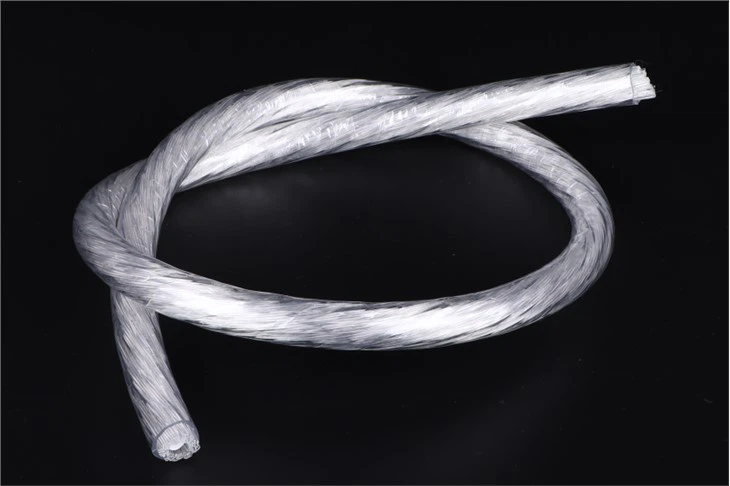
There are various types of fiber optic products available in the market. For instance, the Fiber Optic Lighting Sparkling Hand Crafted Crystal Lighting showcases the aesthetic potential of fiber optics, creating a sparkling and unique lighting effect. On the more technical side, the Fluorescent Optical Fiber can emit light through its fluorescence, expanding the range of lighting options.
Advantages for Medical Lighting
One of the primary advantages of using lighting fiber optic bundles in medical settings is their ability to provide precise and focused illumination. In surgical procedures, for example, surgeons need a clear view of the operating area. Fiber optic bundles can be designed to direct light exactly where it is needed, reducing shadows and improving visibility. This precision can enhance the accuracy of surgical interventions and potentially lead to better patient outcomes.
Another benefit is the flexibility of fiber optic bundles. The Twisted Fiber Optic Cable offers a unique design that can be easily maneuvered. In medical equipment, this flexibility allows for the lighting system to be adjusted according to the specific requirements of different procedures. It can be bent and shaped to fit into tight spaces, such as inside endoscopes or during minimally invasive surgeries.
Fiber optic lighting also has the advantage of being low - heat. In medical applications, excessive heat can be a significant problem. Traditional lighting sources may generate heat that can cause damage to tissues or affect the performance of sensitive medical equipment. Fiber optic bundles transmit light without generating a significant amount of heat at the end - point of illumination, making them a safer option for medical use.
Specific Medical Applications
Surgical Lighting
In the operating room, lighting fiber optic bundles are increasingly used in surgical lights. These lights need to provide high - intensity, shadow - free illumination. Fiber optic surgical lights can be designed to have multiple light sources and adjustable heads, allowing surgeons to customize the lighting according to the procedure. For example, in a delicate neurosurgery, the ability to focus the light precisely on the small area of the brain being operated on is crucial.
Endoscopy
Endoscopes are medical instruments used to examine the internal organs of the body. Lighting fiber optic bundles are an essential component of endoscopes. The Soft 1.0mm Side Emitting Optic Fiber LED can be integrated into the endoscope to provide illumination from the side. This side - emitting feature helps to evenly light up the internal cavity being examined, providing a clear view of the tissues and organs.
Dental Lighting
In dentistry, fiber optic lighting is used in dental chairs and hand - held instruments. Dental procedures require good lighting to accurately diagnose and treat dental problems. Fiber optic dental lights can be adjusted to different intensities and angles, providing dentists with a clear view of the patient's mouth.
Limitations and Challenges
While there are many advantages, there are also some limitations to using lighting fiber optic bundles in medical lighting. One of the main challenges is the cost. The production of high - quality fiber optic bundles for medical applications can be expensive. This cost is often passed on to the end - user, which may limit their widespread adoption, especially in resource - limited healthcare settings.
Another limitation is the durability of the fiber optic bundles. In a medical environment, the equipment is often subjected to frequent use, cleaning, and sterilization. Over time, the fibers in the bundle may become damaged, leading to a decrease in the quality of the illumination. Regular maintenance and replacement of the fiber optic bundles are required to ensure optimal performance.
The Future Outlook
Despite the challenges, the future of using lighting fiber optic bundles in medical lighting looks promising. With advancements in technology, the cost of producing fiber optic bundles is likely to decrease. New materials and manufacturing techniques are being developed to improve the durability and performance of the bundles.
The Color Changing Fiber Optic Lamp concept can also be applied in medical lighting. Different colors of light may have different effects on the human body and can be used for specific medical purposes, such as phototherapy.
Conclusion
In conclusion, lighting fiber optic bundles have significant potential for medical lighting applications. Their precision, flexibility, and low - heat properties make them suitable for various medical procedures, including surgery, endoscopy, and dentistry. Although there are challenges such as cost and durability, the continuous development of fiber optic technology is likely to overcome these limitations.
If you are interested in exploring the use of lighting fiber optic bundles for your medical lighting needs, I invite you to contact me for further discussions and potential procurement. We have a wide range of high - quality fiber optic products that can be tailored to your specific requirements.
References
- fiber Optics for Medical Applications: Principles and Practice, by Some Author
- Advancements in Medical Lighting Technology, Journal of Medical Equipment and Technology, Volume X, Issue Y