

Hey there! As a supplier of Lighting Fiber Optic Bundles, I often get asked about the signal transmission speed of these nifty little things. So, I thought I'd take a deep dive into this topic and share what I've learned.
First off, let's understand what a lighting fiber optic bundle is. It's basically a collection of optical fibers that are bundled together to transmit light. These bundles are used in a variety of applications, from decorative lighting to more complex industrial and medical uses.
Now, onto the signal transmission speed. The speed at which signals travel through a fiber optic bundle is incredibly fast. In fact, it's close to the speed of light in a vacuum, which is about 299,792,458 meters per second. But in a fiber optic cable, the speed is a bit slower due to the refractive index of the material the fiber is made of.
Most fiber optic cables are made of glass or plastic. Glass fibers generally offer better performance in terms of signal transmission speed and distance. They can transmit signals at speeds very close to the speed of light in a vacuum, usually around 200,000 kilometers per second. Plastic fibers, on the other hand, are a bit slower, but they're also more flexible and cheaper, which makes them a popular choice for some applications.
The signal transmission speed of a lighting fiber optic bundle is also affected by factors like the quality of the fiber, the length of the bundle, and the type of signal being transmitted. For example, if you're transmitting a high - definition video signal, you'll need a fiber optic bundle that can handle a high data rate.

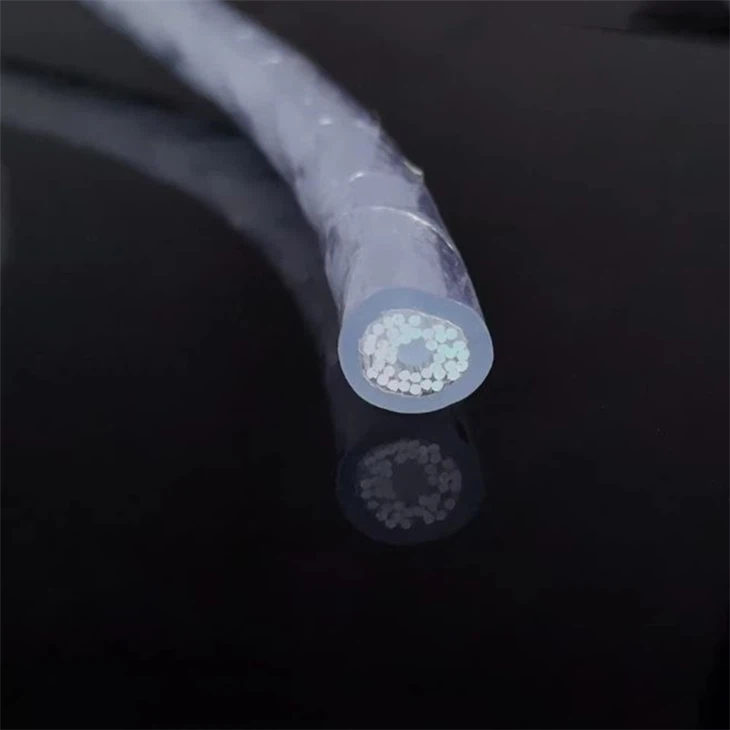
Let's talk about the different types of fiber optic bundles we offer. We have the Best Side Emitting Led Fiber Optic. This type of fiber optic is great for creating unique lighting effects. The side - emitting feature allows the light to shine out from the sides of the fiber, creating a soft, diffused glow. It's perfect for decorative lighting in places like restaurants, bars, or even in your home.
Another product we offer is the OD:12mm Multi - strand Twist Optic Cable. This cable is made up of multiple strands of fiber that are twisted together. The multi - strand design helps to improve the signal transmission and also gives the cable more flexibility. It's suitable for both indoor and outdoor lighting applications.
And we also have Lighting Fiber Optic Fittings Ending Pieces. These fittings are essential for connecting the fiber optic bundles to light sources or other components. They ensure a secure and efficient connection, which is crucial for maintaining the signal transmission speed.
When it comes to the practical applications of these fiber optic bundles, the possibilities are endless. In the entertainment industry, they're used to create amazing lighting effects on stage. In architecture, they can be used to highlight building features. And in the medical field, they're used for things like endoscopes, where a high - speed signal transmission is necessary for clear imaging.
Now, you might be wondering how to choose the right fiber optic bundle for your needs. Well, it depends on a few factors. If you need a high - speed signal transmission for a long - distance application, glass fibers are probably your best bet. But if you're looking for something more flexible and cost - effective, plastic fibers might be the way to go.
Also, consider the environment where the fiber optic bundle will be used. If it's going to be in a harsh environment, you'll need a bundle that's more durable and resistant to things like moisture and temperature changes.
If you're interested in purchasing our Lighting Fiber Optic Bundles, we'd love to have a chat with you. We can help you figure out the best product for your specific needs. Whether you're a lighting designer, an architect, or just someone looking to add some cool lighting to your home, we've got you covered.
In conclusion, the signal transmission speed of a lighting fiber optic bundle is pretty impressive. It allows for fast and efficient transfer of light signals, making it a great choice for a wide range of applications. And with our high - quality products and expert advice, you can be sure that you're getting the best value for your money. So, don't hesitate to reach out and start a conversation about your fiber optic needs.
References:
- "Fiber Optics: Principles and Applications" by John M. Senior
- "Optical Fiber Communications" by Gerd Keiser