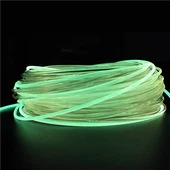
Fiber bundles are optical transmission components composed of multiple single-mode or multimode optical fibers arranged in a specific pattern. They are widely used in medical endoscopy, industrial inspection, communication coupling, and lighting. Their assembly method directly impacts the bundle's performance parameters, such as transmission efficiency, numerical aperture, and spatial resolution.
The core steps in fiber bundle assembly include fiber screening, alignment, and curing and encapsulation. First, the appropriate fiber type must be selected based on the application requirements, such as quartz fiber (high temperature resistance) or plastic fiber (excellent flexibility). Individual fibers typically have a diameter of 50 to 600 microns and require precision instrumentation to ensure consistent optical performance. Second, the fiber arrangement determines the bundle's functional characteristics: regular arrangements (such as hexagonal close packing) are suitable for high-density imaging and maximize light throughput, while random arrangements are used for non-imaging applications such as illumination, prioritizing uniformity. During the alignment process, gaps between fibers must be minimized to reduce optical loss. Mechanical clamping or temporary fixation with UV adhesive is often used.
Curing and encapsulation is a critical step. After alignment, the fiber bundle undergoes a secondary coating process, typically with acrylic or stainless steel bellows, to enhance mechanical strength and environmental resistance. For high-precision applications (such as medical imaging), the bundle undergoes a fusion taper or epoxy potting process to ensure no relative displacement between the fibers. Finally, optical testing verifies the bundle's transmission efficiency and crosstalk performance. Unsatisfactory bundles require reprocessing and rearrangement.
Modern fiber bundle manufacturing also incorporates laser welding and automated assembly technologies, significantly improving the reliability of mass production. With advances in micro- and nanofabrication technologies, miniaturized, multi-branched fiber bundles are becoming a research hotspot, offering new solutions for optical interconnection in complex environments.