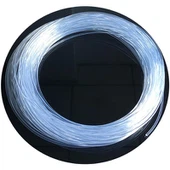
As the core transmission medium of modern communication networks, fiber optic cables possess unique logistics characteristics, imposing stringent technical requirements on transportation, warehousing, and distribution.
Physically, fiber optic cables are primarily composed of quartz glass fibers and a plastic sheath, making them highly brittle and susceptible to bending damage. During logistics, vibration, compression, or improper bending can cause fiber breakage or signal attenuation. Therefore, pressure- and shock-resistant packaging materials, such as bubble wrap, pearl foam, and rigid paper tubes, must be used, and the coiling radius must meet standards (typically no less than 20 times the fiber diameter). Furthermore, fiber optic cables are sensitive to humidity, and humid environments can cause sheath degradation or corrosion of the internal metal reinforcement. Therefore, moisture-proof and sealed packaging is required, and the temperature and humidity range must be controlled during transportation (recommended temperatures range from -20°C to 50°C, with a relative humidity of ≤85%).
In terms of logistics, fiber optic cables are primarily transported by land (vans) and air for efficient short- and medium-distance delivery. Long-distance ocean transportation requires enhanced securing and moisture-proofing within containers. During transportation, avoid mixing with sharp objects and chemicals, and strictly adhere to "handle with care" procedures. Warehousing requires constant temperature and humidity, limited stacking height (typically no more than three layers), and regular inspections of packaging integrity.
Notably, fiber optic cable logistics must also comply with industry certification standards (such as ISO 11801 and ITU-T G.652). Some special-purpose optical fibers (such as those for military or medical use) may be subject to stricter transportation regulations. In summary, fiber optic cable logistics management requires a comprehensive approach to materials science, packaging engineering, and supply chain optimization to ensure uncompromised performance throughout transportation.