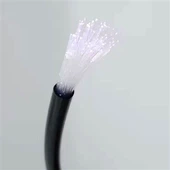
As the core transmission medium of modern communications networks, the performance and reliability of fiber optic cables directly depend on strict standards and specifications. As a representative product in the industry, Most fiber optic cables adhere to standards that cover international standards, regional technical requirements, and manufacturer-specific guidelines, ensuring efficient transmission and long-term stability in complex environments. This article systematically explains the implementation standards of Most fiber optic cables, including technical parameters, test methods, and certification systems.
1. International Standard Framework
The design and manufacturing of Most fiber optic cables primarily adhere to the core standards established by the International Telecommunication Union (ITU-T) and the International Electrotechnical Commission (IEC). For example, ITU-T G.652 and G.655 define the geometric characteristics, attenuation coefficient, and dispersion parameters of single-mode optical fiber, while IEC 60793 further refines optical performance specifications, including attenuation values at 1310 nm and 1550 nm (typically ≤0.36 dB/km and ≤0.22 dB/km, respectively). In addition, the outer sheath material and mechanical strength must meet the environmental adaptability requirements of optical cables as specified in IEC 60794-1-2, such as tensile strength (≥1000N) and bend radius (static ≥10 cable diameters, dynamic ≥20 cable diameters).
2. Regional Technical Adaptation
Most fiber optic cables must meet additional regional standards to meet the specific needs of different regions. For example, in the North American market, the ANSI/TIA-568 series of standards specifies bandwidth requirements for multimode optical fiber (such as OM3/OM4) used in commercial building cabling (≥2000MHz/km at 10Gbps@850nm). Europe emphasizes fire resistance through EN 50173 (for example, low-smoke zero-halogen (LSZH) sheaths must pass the IEC 60332-1 flame retardancy test). Most cables ensure compatibility in these scenarios by adjusting the buffer layer structure or sheath material.

3. Key Performance Test Standards
To verify product quality, Most fiber optic cables undergo a series of standardized tests:
Optical Performance: Link loss and connector reflectance are measured using an OTDR (Optical Time Domain Reflectometer) (return loss ≥ 45dB);
Mechanical Durability: Repeated bending test in accordance with IEC 60794-1-E1 (attenuation increase ≤ 0.1dB after 1000 cycles);
Environmental Adaptability: High and Low Temperature Cycle Test (-40°C to +85°C), Damp Heat Test (85% RH @ 85°C for 96 hours), and Salt Spray Corrosion Test (in accordance with IEC 60068-2-52).
4. Certification and Compliance
Most fiber optic cables typically require third-party certification, such as OFNR/OFNP flame retardancy certification from UL (Underwriters Laboratories), the EU CE Mark (covering EMC and RoHS directives), and telecommunications cable network access approval from the China Taier Certification Center (TLC). These certifications ensure product interoperability and legal compliance within the global supply chain.
Conclusion
Most's fiber optic cable standards embody a balance between technical rigor and market demand. By integrating international standards, regional compliance, and rigorous testing processes, these products not only ensure the reliability of high-speed data transmission but also provide a solid physical layer foundation for emerging areas such as 5G and cloud computing. As optical communication technology evolves, relevant standards will continue to be updated, driving the development of fiber optic cables towards higher bandwidth and lower loss.